Showing posts with label Gnome. Show all posts

Monday, December 22, 2014

Point and Click Jam - Aftermath

A certain revival of old adventure game classics has begun. With the announcements of Day of The Tentacle, all that remains is Full Throttle.

Well, normally this would have been another philoshopical rambling about some topic. But today, I felt the need to bother with the much recent and wonderfully succesful Point and Click Jam. Of all the jams I watched closely or partecipated to this year, this one seemed to outpolish all of them. There were absolutely no amateur entries here. It felt like a bunch of veterans were against each other, fighting for the first spot. This may be a correct first impression, however upon closer inspection that is not exactly the case. The majority of the contestants, haven't even made an adventure game before (some I believe haven't even made a game!), so why does this not feel as amateur hour (pointing at the Pewdiepie VS Indie Jam)?

Because, there's no way to pull off certain genres with half-assed efforts. Which explains the duration of this game-making competition and any other adventure game competition. Think about it! Even OROW (abbreviation stands for One Room One Week), that is about making an adventure game in one room/screen, lasts a week. For it is quite known and obvious to all developers, that you could make a platform game in a matter of hours, but as a genre, adventure games are focused on the story and atmosphere, and it's rather hard to set up pacing, flow, story arc, character design, interface, puzzles within the span of a day, let alone in a lesser time.

It's a genre that begs for lots of hours of work, but also for quality in their ranks. Arguably regardless of the design of your game, polishing it, is a vital element. For adventure games in particular, it works on every little part that they consist of, making it impervious and necessary to bother with. And here I am two paragraphs in, and I'm already transforming back to Plato.

Anyhow - about the Point And Click Jam.

It was organized by the good people down at GameJolt, and the rules were quite simple (and a bit on the annoying side too!). In 15 days you had to make an adventure game of the point and click kind, whereas the interface was left open for developers to either make ones that have already been famous from games of the era, or construct a new one. The resolution was forced to 320x200 so that you could get that "1991 feel" and you could work on your story before the jam begun (but just the story!). The ultra annoying bit for me, was the palette restriction. To make things more challenging and closer to the Lucas Arts / Sierra Era we all loved when we were growing up, the rules stated that you had to use a certain palette (a number of colors) to make your entry.

That was of course set to maintain a retro feel, along with the rule that also made clear that you're not allowed to make use of a technology further developed after 1992 or so (contemporary technologies in making the assets of your game had to be used). While, this helped created quality entries in a weird masochistic way, I found it rather unappealing. It should have at least broadened the restrictions by allowing the use of transparency, if not alpha channels on sprites.

Regardless I consider the jam to be highly succesful, as through it wonderful games such as "A Fragment of Her", "Max Greene", "The Exciting Space Adventures of Greg And Linda", "Void And Meddler", "There Ain't No Sunshine", "A Cosmic Song" and others, spawned. I highly suggest checking all the entries, but these especially are worth it a tiny bit more. Wait, aren't adventure games dead? :P

Posted @Gnome's Lair

Tuesday, November 25, 2014

Did you cry


Talking about TV series with my brother yesterday, the conversation took an interesting turn. "Have you played The Walking Dead video-", he said, but briefly interrupted by my nod. "This may be weird to you, but I cried at the end", he exclaimed. This created a wonderful discussion over which videogames have made us feel sentimental in the past. Anyhow, as I started to wonder, I felt a nice warm feeling recalling the games I was connected to in such emotional way.

For a moment I got lost into a philosophical journey. In movies it's somewhat easier to cry and generally share or be overcome by certain sentiments/feelings, because the usual behavior we have while experiencing a story is to attempt to relate to it. But with games that's usually different, mostly because we have full (or at least the illusion of such) control over the protagonist's actions, and the protagonist in most cases serves as a vessel of ourselves.

With the creation and the world-wide success of Elite, a significant change to videogames has occurred. An alteration to the rule that a score must determine the skill of the player and the player's involvement to the game must resolve around his/her attempts to get the highest score possible. With Elite we were slowly introduced to something far greater. The probability that games could "just" have a decent storyline instead of a score. And as time passed and technology progressed, it happened. The early nineties were mostly dominated by Adventure Games and RPGs, both primarily focused on gripping story arcs presenting elements such as branches, depth, setting, character development, etc.

Even if the adventure game genre itself  lost part of its sunlight and glory, it helped immensely in paving the way for other genres, that then were mostly focusing on excessive button mashing, to evolve. Action / First Person Shooter franchises such as Max Payne, Metal Gear Solid, System Shock, Half Life, Resident Evil disengaged from the brainless stereotype of exaggerated, rapid frenzy and reckless gameplay to a more delicate, no rather, realistic approach. As storyline became an new element in game design, cinematic elements have been introduced, converting videogames to a new form of art (even though that could be a stretch). An art we can interact with our own ways within the limits that are presented to us (visible and not).

Posted @Gnome's Lair

Friday, November 14, 2014

Final Fantasy IV or is it III or is it 6 ..eh...


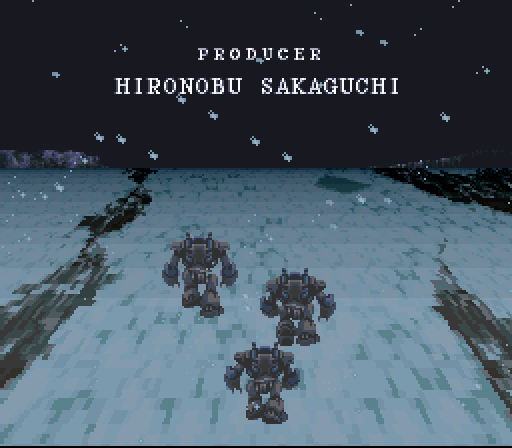
That intro still can't be be beat, so perfect in every single way.


You know, someone is cringing at the comments going like " Do you mean Final Fantasy III?", so let's settle this for once, I will call this VI, cause it happened to be the 6th game of the series. I can't remember a single game I've played for the sole reason that it had great music and I actually wanted to hear more of it. I've been influenced musically, stylistically, game-design wise, but most certainly, entirely by this installment in the series.

Dissecting its nowadays considered cult introduction sequence, the very one accompanied by the most memorable tunes ever to grace a game, the attention to detail is miraculous. Slowly helping new and old players realize the setting, and applying strong and firm points of interest by playing around a typical cliche, we're slowly immersed into a world of conflicts. As technology battles magic, deeper connections are created, making it harder to pick a side. Both are justified in their unique ways, engulfing the incredibly complex cast of characters into choices and situations undesired.

Final Fantasy's story alternates around the same perspectives - it's about the end of an era, as much as it is about the beginning of another one. I refuse to tell you anything about the story, dear reader, but I will tell you this: In this part of the saga called Final Fantasy, an important choice was made. A choice that every technological probability of the engine that would sport the game, would be used to its fullest potential. From the very first minutes, the proof is presented to us.

Heavily utilizing Mode 7 functions and tidbits for cinematic and general purposes, even though released almost 20 years ago, the graphical quality of the game still holds up to both sentimental but also historically innovative (for the time being) standard. In case you're wondering what on earth Mode 7 graphic effects are, they're basically various graphical tricks where a two-dimensional image is taken and skewed/distorted in such way that it gives the impression of a third dimension, without that dimension however ever actually existing; thus pseudo-3D.

Now, back to the topic at hand, besides the wonderful protagonist(s), there's Kefka, one of the most notorious videogame villains of all time. Terribly underrated and rather overshadowed by Sephiroth, I strongly believe the latter would a be at best a common lackey under Kefka's rule. The game's opera sequence/cinematic is also what is held most dear by its players, not only for the music but also for the unprecedented and unexpected depth and epicness it provides to the central plot as the story seamlessly peaked.

It's a terrible thing that the majority of the Final Fantasy fanbase was taken over by the luscious prerendered quality of the 3D graphics and the impactful death scene of Iris by Sephiroth, ever-forgetting this masterpiece. If it wasn't for the release of FFVII, this gem would be significantly more appreciated by the mainstream (because the press is doing its best to restore its value). But those who have had the fortune to spend hours upon hours on it, know it deep in their hearts and cherish it. And perhaps secretly wish for a proper remake or a sequel.

Posted @ Gnome's Lair

Tuesday, October 21, 2014

The INDIE Game God Dream


This message never stopped you from playing. 


Come on, whether you've already made or just thought about making a videogame, you've dreamt the dream. It's not a shame, I tell you. What are dreams for if not for evoking the seemingly improbable or unobtainable? It's not worth bothering with something that provides no challenge whatsoever. It has to tax you both physically and intellectually. But being an indiegame god, is a different thing.

It's not just about making a living out of videogames; countless game designers have done that. Neither is it about creating a product or a service worth being invested in. It all boils down to perceiving and producing what others have not before. Thus, by the end of your estimated time of production, you accomplish what separates the game designers from the game gods. You change the course of the entire videogame industry. Whether your concept is based upon a certain genre, bringing new, exciting, never before used/implemented elements or it single-handedly creates a new one. Regardless of which, you rise from obscurity to worldwide fame and glory (or a portion of it).

You transform a hobby/passion into work.

It isn't simply saying "I make money from selling videogames", it's knowing you craft hours worth of excitement and innovation (even if it's scarce or minor) for people that have trusted/invested in you. And the stories of failure may indeed be present, perhaps far more present than I want to admit (this is an article to hype you, reader), but there's no game designer that set up his/her own indie game company, that started knowing how big his/her initial dreams would get. If that wasn't true, people like Dan Marshall, Agustin Cordes, Dave Gilbert, wouldn't exist. They would still be living in their parents' house/basement, or living their daily routines as they were, before they took the boldest step.

The step to attempt to give it all up to conquer even the smallest possibility of gaining enough of their yearly income, to live, play and create videogames. And how do you start doing that? Is there a specific trick to it, you ask? I'm afraid not. All you need is an idea and a way and perseverance. Bluntly put in the simplest of words, you have to try without fear of failing, dear reader.

Posted @ Gnome's Lair:


  • DualMondays: Inspiration


  • DualMondays: Boss Fights 101


  • Monday, September 29, 2014

    Boss Fights 101

    I know the lot of you really like cool retro arcade games that sport huge, monstrous, ridiculous bosses throughout their span. But thing is almost every kind of game is taking advantage of this feature. And why wouldn't they? Boss fights in their core are overhyped, outrageous gameplay segments that decide your worth and mastery of the game. They get you tense, they make you feel good about yourself, they make you lose your cool and mind over them, as you waste countless hours of button smashing and thinking around the box in the process of overcoming the improbable odds and coming out victorious.

    Sometimes, it hurts.
    But what does a boss fight consist of? What are the main elements it requires to be classified as such? Usually boss fights take a set of moves previously used by the player as part of the gameplay and make you use them in a different way. For example, in Portal you are taught the incineration mechanism used in the final boss fight by doing so in the earlier game with the Love companion. Additionally, placing the portals to make a turret shoot missiles at itself is also introduced earlier in the game. That's the way the game designer is teaching you the elements/attacks that you will require to execute under different conditions and parameters to accompish your goal(s).

    But what about genres that are less action-packed? Can boss fights be equally effective across genres? The answer is simple. If done right, yes. Take the sequel to Monkey Island. Le Chuck's Revenge was published back in 1991 and happens to be a shining example. Initially helping the player construct a basic voodoo doll by categorizing the basic four items it requires into four big differentiated themes, will prove immensely helpful when the player is required to repeat the process towards the game's finale. To me, even if Guybrush is almost immune to Le Chuck's attacks, the mental stress and tension that is built during the introductory scene, helps making this boss battle one of the most memorable and stressing I've ever encountered.

     Does it get more soul-tearing than this?
    And said tension and story-driven pace is what dictates all boss fights. It's about facing the last obstacle standing in your way in order to advance the story. It's not just solely to prove your mastery of the game's mechanics; these fights drain you both physically and emotionally. It's the confrontation of two diametrically different, yet so alike, paths.

    This is posted at Gnome's Lair

    Monday, September 22, 2014

    Press Start To Begin

    This post also appears at Gnome's Lair, so this just a crossspost, go there and share your thoughts, I will be writing there every Monday, and will post the articles here as well. Gnome himself has kindly shared his webspace with me.


    In Greece we have a saying: "The beginning is the half of everything." I'm not sure this is in fact a proper translation, so please do excuse me in advance, if that's the case. Thing is, it sounds so much more impactful in my native language.  This ancient saying by Pythagoras is something I've always kept in mind when I started work on a project. Whatever that may be, it applies for everything, videogame production included.

    For some reason lack of composure and motivation - common difficulties that every developer has faced - were always magically transformed  into challenges. Challenges that I *had* to overcome. And I knew, thanks to this particular piece of wisdom, that if I could get by the initial hurdles, the best was yet to come. Even when I was designing the boring parts of a game or a program, I knew that all that was needed, was to actually begin work, and then I'd see it through.

    Recently, Mark Yohalem, member of Wormwood Studios and writer of Primordia (which I personally coded *cough* self promotion *cough*) wrote a blog post releasing information about Cloudscape. Cloudscape is a now abandoned project and Yohalem wrote a very interesting piece regarding the reasons behind said decision from his point of view. So, with that in mind, I came to solidify my thinking about abandonded projects throughout. It's not about there being enough talent on your team (regardless of team member number), but about whether someone/the team actually creates a portion of the product.

    To begin
    The baby steps of any project shouldn't be exclusively about brainstorming over a wonderful idea. Even though it does help to keep everyone excited and hyped, brainstorming alone doesn't contribute any actual work towards the main goal - which is to deliver a finished product to the market. Endlessly coming up with new, exciting ideas is a common loop in which even the most talented teams have found themselves.

    Gradually the initial emotions get toned down and then everything is about creating the silliest, most dysfunctional alpha version of your dream, regardless of its countless faults. It stands to show to everyone in and out of the team, that this is doable. It's a proof of concept, it's a motivational wheel, it's to put it bluntly - the half of everything.

    Saturday, January 21, 2012

    AGS Bake Sale Coverage

    The AGS Bake Sale has had some mishaps so far, but it's still going well, I hope. So far it has been covered by:


    And several others... it's great to see it out there by the lot. You can still go ahead and get some! ! !

    Monday, January 16, 2012

    ^_____^

    Ben304, has released a funny little game that he decided to call ^_^ like the famous emoticon. The game is about a Werebunny that wants to become a human again. It's a mix of Spore meets Buffy meets Cuteness meets The Nightmare Before Christmas meets ..well. Yeah.

    Prepare to meet Witches and Vampires and some God. It took me around 35 minutes, but definitely well spent. The interactions are fantastic, you can bite things, you can headbutt things, you can do stuff!

    Plus the Gnome liked it too. You can't get wrong with two people liking it!


    DOWNLOAD THE BLOODY GAME (doesn't include blood)

    Wednesday, November 23, 2011

    Egress: Or How Did We Miss That?

    Personally I blame the AGS forums being down. Cause we missed, well, I did at least, Egress. Dane Krams, or Sughly, made this FP adventure game, very similar to the MOON (Sam Rockwell movie plx), but generally affected by all kinds of sci-fi greats.

    I won't lie, I just started playing the game, cause I just noticed. But, some people, probably with accounts like IRNOTREPORTER or LURKER12 did. And they posted for their blogs/sites.

    Monday, November 21, 2011

    The Last And Final Word

    Yes, the title makes no sense, even by my low standards, but it's a very fascinating thing I discovered, thanks to Gnome. To explain myself, it's a blog/tumblr/collection of Fifty interviews from Fifty developers.

    Including Ben Chandler (Ben304, you dorks!) and Shane Stevens (ProgZMax)

    Speaking of fantastic stuff, forums are up.

    Wednesday, October 12, 2011

    Review: Blackwell Deception

    Today, Wadjet Eye Games has released its newest game, which happens to be the franchise that Dave Gilbert himself, is to blame for.


    -INTERFACE


    The changes towards some directions that Dave Gilbert has made, only feel natural and correct. The mouse cursor changing color to indicate which character you are controlling, is just one sprite, but really works magnificent. The control interface is basically the same, and takes zero time to get adjusted to - and if problems arise, Dave has integrated a tutorial so neatly in the start of the game. I am really impressed by how easily and naturally issues, that would bug you in the previous games, have been solved here.

    With that said, I found the menus a bit generic to be frank. Perhaps I am nitpicking, but they felt a bit uninspired, graphically. I am quite possibly nagging for nothing.

    -GRAPHICS

    Hiring InCreator and Ben304, is probably the greatest team-up you could come up with. The background art and related animation, is definitely fantastic, and really raises the bar. A mix between 3D and 2D, really shows attention to detail, and makes every background worth it. About the character art, what can be said about Ben Chandler, that has not be said before? The animations are extremely fluid and retro-like, and there's a lot of diversity in terms of character designs. Initially one can rush to the conclusion that the character art and the background art, don't match, but I feel they give a graphical boost to the series that was perhaps needed.

    -STORY

    Well, I don't want to spoil much, in fact I'd rather not say anything, but since I am forced to, by Scottish supermen, I have to say that the story is definitely bloody brilliant. It's probably like watching a nice movie, it kind of stays with you for a bit after it's over. I think also a sequel is due. The conversations between Rosa and Joey are still fantastic, and perhaps even more amusing this time.

    The best thing about this game is that it plays like a standalone game. You don't have to play the rest first, though that would be nice. And unless I am mistaken Wadjet Eye Games offers all the Blackwell games in a DVD.


    -EXTRAS


    The music and voice work are still top notch, with the voice work feeling more natural than it did for Gemini Rue. It probably has to do with the fact that the team has been stabilizing a bit, but regardless this has to be noted. I also found the best part of the game to be the Developer Commentary. Unlike Gemini Rue where frankly I hated it's implementation, here, in Blackwell, it's simply fantastic.


    -INFO

    The official Wadjet Eye Games, Blackwell Deception page.
    A demo straight from the AGS Database
    The Blackwell Deception topic, at the AGS Forums

    The game is available for $14.99 (download) or $24.99 (limited edition DVD version). Note that the DVD will only be offered through this Sunday, October 16.


    -CONCLUSION

    Blackwell Deception, the fourth installment on the series, has just one flaw for me. It leaves you begging for a sequel. The game is certainly the best of the series, hands down.


    -NOT LIKING THIS REVIEW:

    You can always read the same opinion, expressed in a more coherent and verbally correct way.
    So, here's two of them.

    Sunday, September 25, 2011

    Maniac Mansion is Awesome!!!

    A bit non-AGS stuff, but still fantastically worth it. Three comic strips based on Maniac Mansion. It craves me for more. I believe I saw this from Gnome's facebook. So cheers to mr. Gnome.

    Friday, March 11, 2011

    Indie game designer @ Indie games

    It was a dark and stormy night. Suddenly, Indiegames interview Mr David Gilbert! A door slammed. The maid screamed. Suddenly, a pirate ship appeared on the horizon! While millions of people were starving, the king lived in luxury.

    Meanwhile, on a small farm in Kansas, Indiegames also mentioned the AGS Awards.

    A light snow was falling, and Gnome's Lair also covered the awards. At that very moment, a young intern at City Hospital was making an important discovery. The mysterious patient in Room 213 had finally awakened. She moaned softly. Could it be that she was the sister of the boy in Kansas who loved the Gnome who was the son of the maid who had escaped from the pirates? The intern frowned.

    Friday, October 22, 2010

    Thursday, September 23, 2010

    Monday, September 20, 2010

    The late Joey Malone

    Gnome reviews Blackwell Legacy, like 1000 years after it came out. Tccch! You just can't get the garden ornaments these days.